Is Customer Service AI Making Human Support Obsolete?
-
June 18, 2026 10:24 PM PDT
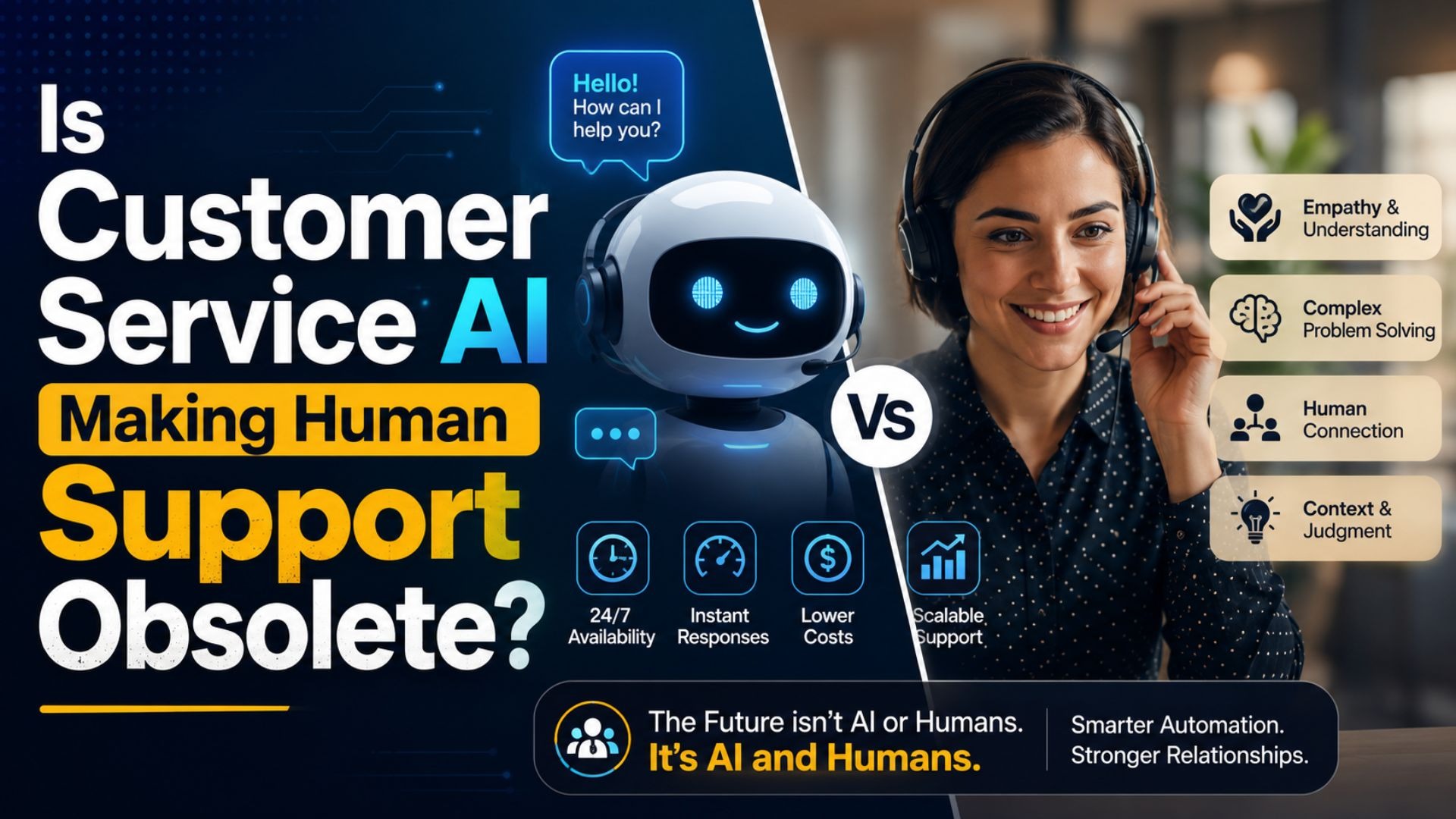
Is artificial intelligence truly replacing human customer support, or is it simply transforming how businesses interact with customers? The short answer is that Customer Service AI is not making human support obsolete, but it is reshaping the customer experience by automating repetitive tasks and improving response efficiency.
Having worked with organizations implementing AI-powered support systems, I have seen firsthand how automation reduces wait times, improves consistency, and helps support teams focus on complex customer needs. While AI has become increasingly capable, empathy, critical thinking, and nuanced problem-solving remain uniquely human strengths. Understanding the balance between technology and human expertise is essential for businesses seeking to deliver exceptional customer experiences.
What Is Driving the Rise of AI in Customer Support?
Businesses face increasing customer expectations. Consumers want instant answers, 24/7 availability, and personalized experiences across multiple channels.
Several factors have accelerated AI adoption:
-
Growing customer service volumes
-
Rising operational costs
-
Demand for faster response times
-
Advances in natural language processing
-
Availability of cloud-based AI platforms
According to industry reports, AI-powered chatbots can resolve a significant percentage of routine customer inquiries without human intervention. This allows organizations to improve efficiency while maintaining service quality.
Common AI Applications in Support
Modern support systems often include:
-
Chatbots for routine questions
-
Automated ticket routing
-
Sentiment analysis tools
-
Voice assistants
-
Predictive customer support
These technologies help organizations provide faster and more consistent service experiences.
Why Human Expertise Still Matters

Despite rapid technological advances, human support remains essential for many interactions.
In my experience consulting on customer experience initiatives, customers often prefer speaking with a person when dealing with sensitive issues, complaints, or complicated situations. Human representatives can interpret emotions, adapt communication styles, and build trust in ways that AI currently cannot fully replicate.
A practical example is handling billing disputes. While automation can identify account details quickly, resolving frustration often requires empathy and judgment.
Quick Tip Box
Best Practice: Use AI to manage repetitive tasks while empowering human teams to handle high-value conversations. This hybrid approach typically delivers the strongest customer satisfaction results.
Organizations that successfully balance technology and people often see improved efficiency without sacrificing customer loyalty.
Many businesses now equip their call center agents with AI-driven insights, enabling them to access customer histories, recommended responses, and real-time guidance. Rather than replacing employees, AI frequently enhances their productivity and effectiveness.
How Does AI Compare With Human Support?
Both AI and human representatives offer distinct advantages.
AI Strengths
-
Available 24/7
-
Consistent responses
-
Instant processing
-
Scalable during demand spikes
-
Lower operational costs
Human Strengths
-
Emotional intelligence
-
Complex problem-solving
-
Relationship building
-
Contextual understanding
-
Creative decision-making
The most successful organizations rarely choose one over the other. Instead, they create integrated support ecosystems in which Customer Service AI handles routine interactions, and humans address more sophisticated concerns.
Real-World Example
A global e-commerce company implemented AI chatbots for order tracking and frequently asked questions. Within months, support queues decreased substantially, allowing support specialists to focus on escalations and retention-focused interactions. Customer satisfaction scores improved because customers received both speed and personalized assistance when needed.
What Does the Future of Customer Support Look Like?
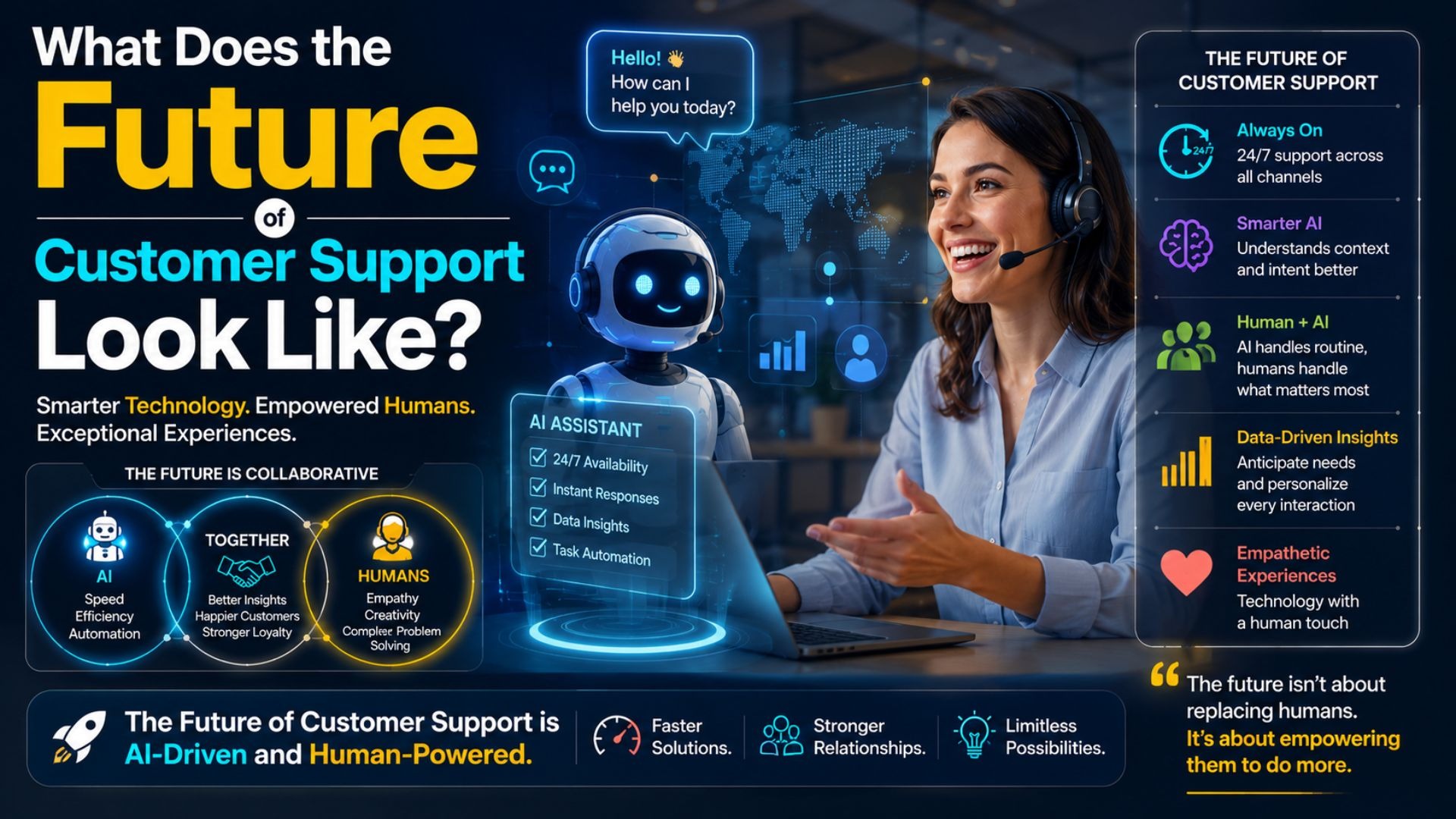
The future is likely to be collaborative rather than competitive.
Emerging technologies are making AI more conversational, predictive, and context-aware. Businesses are increasingly leveraging advanced tools such as an AI Sales Call Assistant to support customer-facing teams during live conversations, providing recommendations, compliance guidance, and relevant customer insights in real time.
However, experts generally agree that trust, empathy, and relationship management will continue to require human involvement. As customer expectations evolve, organizations that blend automation with human expertise will be best positioned to succeed.
Conclusion
Artificial intelligence is transforming customer support, but it is not eliminating the need for human interaction. AI excels at handling repetitive tasks, delivering instant responses, and improving operational efficiency. Humans remain indispensable for empathy, critical thinking, and relationship-building.
Businesses that combine automation with skilled support professionals create stronger customer experiences and achieve better long-term outcomes. As technology continues to evolve, focusing on collaboration between humans and AI will remain the most effective strategy. Explore how your organization can leverage both to create exceptional customer service.
FAQs
Q: What is customer service AI and how does it work?
A: Customer service AI uses technologies such as machine learning, natural language processing, and automation to handle customer inquiries. It can answer questions, route requests, analyze customer sentiment, and provide support across chat, email, and voice channels.Q: Is AI better than human customer support?
A: AI is better for repetitive tasks, instant responses, and handling large volumes of inquiries. Human support remains superior for emotional situations, complex problem-solving, and building customer relationships. Most organizations benefit from combining both approaches.Q: How can businesses implement AI in customer service?
A: Businesses typically begin by identifying repetitive support tasks. They then deploy chatbots, automated workflows, or AI-powered analytics tools while maintaining human oversight for escalations and specialized customer needs.Q: How much does customer service AI cost?
A: Costs vary depending on features, integration requirements, and business size. Small businesses may spend hundreds monthly, while enterprise implementations can involve significantly larger investments due to customization and advanced capabilities.Q: What is the best use case for AI in customer support?
A: The most effective use cases include answering frequently asked questions, ticket routing, appointment scheduling, order tracking, and providing support outside business hours. These tasks benefit from automation and consistent responses.Q: What is the biggest mistake companies make with AI support?
A: A common mistake is relying entirely on automation without offering human assistance. Customers often need personalized help with complex situations, and removing human support can undermine satisfaction and trust. -