6 Attributes of a Good Camp Knife
Posted by The Knife Connection
Filed in Business 68 views
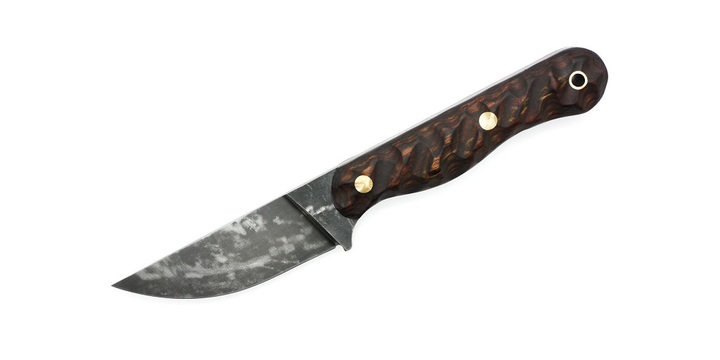
Much like the terms “survival knife”, “tactical knife”, and “bushcraft knife”, there are no hard bounds around the term “camp knife”.
Strictly speaking, if you are using a knife in camp, it’s a camp knife. Even so, there are still a few things by which you can know a quality design when you see (or handle) it.
Here are just a few of the things you should look for in camp knife design to be sure you’re getting something that will perform when the chips are down.
- A practical blade profile. Save the karambits, hawkbills and needle points for more niche applications. A camp knife should have either a straight back or a drop point, though some might also have clip points to give them a little more flexibility with respect to carving tasks and detail work. The less specialized here, the more practical the knife will be.
- A larger, heavy blade. As a general rule, camp knives have large, thick, heavy blades that, while they can be used for fine tasks, are also well suited to chopping and batoning. This makes camp knives among the largest of most general knife patterns.
- Where possible: a convex (ax) grind. This is not a feature that you should make a sticking point, but a convex grind, also called an ax grind, is a value add on a camp knife. This is because ax grinds are the stoutest of all grind types and keep the most blade stock behind the edge. They wear more slowly and are incredibly resistant to rolling, chipping, or other stress-induced damage. The one drawback is it can be a little tricky to properly resharpen an ax grind, but learning that skill is well worth the effort for the other benefits that an ax grind will deliver.
- A corrosion resistant alloy. Here’s another that shouldn’t create an impasse, but all the same, if you can find a camp knife made with a relatively corrosion resistant steel, get that one. Camp knives are used out in the elements and sometimes for prolonged periods of time. High humidity, moisture, and other factors can severely accelerate corrosion on their blades, so it’s best, all else being equal, if you get one that offers some degree of corrosion resistance.
- A comfortable handle. The handle of a camp knife is another area in which you don’t want any unnecessary features. A comfortable handle with a generous palm swell, and generally with a pommel swell, will improve indexing and make it harder for your handle to slip on the knife. These aspects of a camp knife handle will also potentially reduce friction when you are using the knife for rough tasks like chopping. In addition, a crossguard or choil near the front of the knife will help prevent your hand from slipping forward on the handle during use.
- No frills. Lastly, the best camp knife is a simple camp knife. Intricacies and detailed designs should fall under the purview of collectible knives, not camp knives, the first and main purpose of which should be reliable performance in the field.
Here for a New Camp Knife?
If you landed here and are in the market for a new camp knife, either for your collection or because you need something in your trunk for heavy work as needed, visit The Knife Connection.
They carry a wide range of camp knives, along with survival, bushcraft, tactical, and even fishing knives, from the top brands in the industry.
Visit their website to see what they carry and get in touch with them if you have any questions.
For more information about Bark River Knives and Karesuando Knives Please visit: The Knife Connection.