How to Setup a Holding Company in UAE: Complete 2026 Guide
Posted by Sarah Mastan
Filed in Business 68 views

The UAE has become one of the world’s leading destinations for entrepreneurs, investors, family offices, and international businesses looking to structure and protect their assets efficiently. One of the most powerful structures available today is a holding company.
A holding company in UAE allows business owners to centralize ownership of multiple companies, protect assets, simplify succession planning, improve operational control, and create a more efficient corporate structure for long-term growth.
Whether you own several businesses, manage international investments, hold intellectual property, or plan to expand globally, understanding how to setup a holding company in Dubai can provide significant strategic advantages.
This complete guide explains everything you need to know about holding company setup in UAE in 2026, including benefits, legal structures, costs, setup process, taxation, and compliance requirements.
What Is a Holding Company?
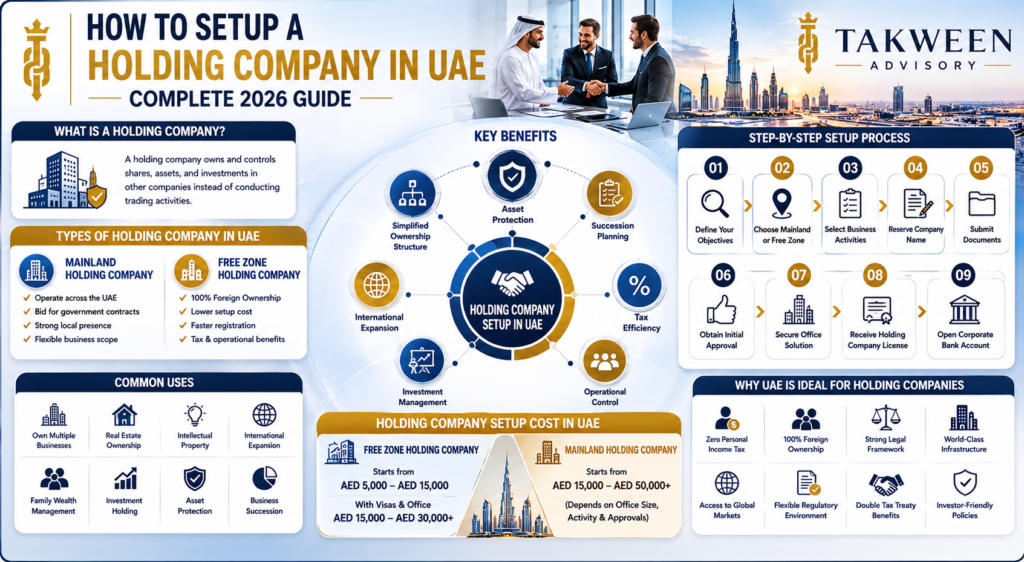
A holding company is a business entity created primarily to own and control shares or assets in other companies rather than directly conducting day-to-day trading activities itself.
Instead of selling products or services directly, a holding company typically owns:
- Subsidiary companies
- Real estate assets
- Intellectual property
- Investments
- Trademarks and patents
- International business entities
- Shares in operating businesses
The main purpose of a holding company is to separate ownership from operations while improving asset protection, business management, and long-term corporate structuring.
In the UAE, holding companies are commonly used by:
- Entrepreneurs with multiple businesses
- Family offices
- Real estate investors
- High-net-worth individuals
- International investors
- Corporate groups
- E-commerce businesses
- Startups preparing for expansion
Why Entrepreneurs Choose Holding Company Setup in UAE

The UAE offers one of the most business-friendly environments for holding company structures due to its tax advantages, flexible regulations, strong banking system, and international reputation.
1. Asset Protection
One of the biggest advantages of a holding company setup in UAE is asset protection.
Holding valuable assets under a separate entity helps reduce operational risk exposure. If one operating company faces legal or financial issues, assets owned by the holding company are generally better protected.
2. Simplified Ownership Structure
A holding company creates centralized ownership across multiple businesses or investments.
Instead of personally owning shares in several companies, the holding company owns them on your behalf, making management and future transfers easier.
3. Succession Planning Benefits
Holding companies are widely used for succession planning in UAE.
Ownership of multiple businesses and assets can be transferred more efficiently through shares in the holding company rather than transferring each individual asset separately.
This makes inheritance and business continuity planning significantly smoother.
4. Tax Efficiency
The UAE remains one of the world’s most tax-efficient business environments.
Benefits may include:
- No personal income tax
- No capital gains tax in many situations
- Corporate tax optimization opportunities
- Access to UAE double tax treaties
- Potential free zone tax benefits
Proper structuring is essential to ensure compliance with UAE corporate tax regulations.
5. International Expansion
A UAE holding company creates a strong international business platform for global operations.
It can own:
- Overseas subsidiaries
- International bank accounts
- Foreign investments
- Global trademarks and intellectual property
This makes UAE holding structures attractive for international entrepreneurs.
6. Improved Investment Management
Holding companies simplify investment management by consolidating ownership under one legal structure.
This helps with:
- Portfolio management
- Investor reporting
- Corporate governance
- Shareholder management
- Business acquisitions
Types of Holding Company Setup in UAE

Entrepreneurs can establish holding companies in either mainland UAE or free zones.
Mainland Holding Company
A mainland holding company is registered through the Department of Economic Development (DED).
Advantages include:
- Ability to operate across UAE
- Flexibility for local investments
- Strong local market presence
- Wider operational scope
Mainland structures are often used by large corporate groups and local investors.
Free Zone Holding Company
Free zone holding companies are among the most popular options in UAE.
Benefits include:
- 100% foreign ownership
- Lower setup costs
- Faster registration
- Simplified administration
- Potential tax advantages
- Flexible office requirements
Popular free zones for holding company setup in UAE include:
- DIFC
- ADGM
- DMCC
- IFZA
- Meydan Free Zone
- RAKEZ
- Dubai South
The best free zone depends on your business goals, investment profile, and international structure.
Common Uses of a UAE Holding Company
A UAE holding company can be used for many strategic purposes.
Business Ownership
Holding shares in multiple operating businesses.
Real Estate Ownership
Managing UAE or international property investments through one entity.
Intellectual Property Holding
Owning:
- Trademarks
- Patents
- Copyrights
- Software rights
- Brand assets
Family Wealth Management
Managing family investments and succession planning.
International Expansion
Controlling overseas subsidiaries and global operations.
Step-by-Step Process for Holding Company Setup in UAE
The process is relatively straightforward when handled properly.
Step 1: Define Your Objectives
The first step is understanding why you need the holding company.
Common goals include:
- Asset protection
- Investment management
- Tax structuring
- Succession planning
- International expansion
Your objectives determine the ideal jurisdiction and structure.
Step 2: Choose Mainland or Free Zone
You must decide whether to establish the holding company:
- On mainland UAE
- Inside a free zone
Free zones are often preferred for international holding structures because of simplified regulations and foreign ownership benefits.
Step 3: Select Business Activities
Holding companies usually register activities such as:
- Holding investments
- Owning shares
- Managing assets
- Investment holding
- Property holding
Choosing the correct activity is essential for banking and compliance purposes.
Step 4: Reserve Company Name
Your business name must comply with UAE naming rules.
Names cannot:
- Violate public morals
- Include restricted terms
- Resemble government entities
- Duplicate existing companies
Step 5: Submit Documentation
Typical documents include:
- Passport copies
- Proof of address
- Visa copies (if applicable)
- Application forms
- Shareholder information
Additional compliance documentation may be required for corporate shareholders.
Step 6: Obtain Initial Approval
Authorities review:
- Shareholder structure
- Business activities
- Compliance requirements
- Ownership information
Once approved, registration proceeds.
Step 7: Secure Office Solution
Depending on the jurisdiction, office requirements may include:
- Flexi-desk
- Virtual office
- Co-working space
- Private office
Many free zones offer cost-effective office packages.
Step 8: Receive Holding Company License
After fee payment and approvals, the holding company license is issued.
The company can then legally hold investments and subsidiary ownership.
Step 9: Open Corporate Bank Account
After incorporation, businesses can apply for a UAE corporate bank account.
Banks typically require:
- Company documents
- Shareholder information
- Business structure details
- Source of funds information
Banking approval depends heavily on proper compliance preparation.
Holding Company Setup Cost in UAE
The cost of holding company setup in UAE depends on:
- Mainland or free zone setup
- Jurisdiction selected
- Office requirements
- Visa requirements
- Number of shareholders
Free Zone Holding Company Costs
Basic free zone holding company packages can start from approximately:
- AED 5,000 to AED 15,000
More comprehensive packages including visas and office solutions may range between:
- AED 15,000 to AED 30,000+
Mainland Holding Company Costs
Mainland structures are generally more expensive because of office requirements.
Typical mainland holding company setup costs range from:
- AED 15,000 to AED 50,000+
depending on office size and structure complexity.
Corporate Tax for Holding Companies in UAE
The UAE introduced corporate tax in 2023.
However, holding companies may still benefit from significant tax efficiencies depending on:
- Structure
- Income type
- Jurisdiction
- Qualifying free zone status
Professional tax planning is essential for compliance and optimization.
Common Mistakes During Holding Company Setup
Entrepreneurs often make avoidable mistakes such as:
- Choosing the wrong jurisdiction
- Poor tax structuring
- Incorrect business activities
- Weak banking preparation
- Improper ownership structures
- Ignoring succession planning
- Failing to document source of funds properly
Correcting these issues later can be expensive and time-consuming.
Why Work With Takween Advisory
Takween Advisory helps entrepreneurs, investors, and corporate groups establish efficient holding company structures across UAE mainland and free zones.
Their services include:
- Holding company setup in UAE
- Corporate structuring
- Asset protection planning
- Succession planning
- Bank account assistance
- Tax structuring support
- Free zone and mainland company formation
- PRO services and compliance support
With access to more than 60 UAE jurisdictions, Takween Advisory helps clients select the most suitable and cost-effective structure for their long-term business goals.
Final Thoughts
A holding company setup in UAE can provide major advantages for entrepreneurs, investors, and family businesses looking to protect assets, simplify ownership, improve succession planning, and support international growth.
Whether you are managing multiple companies, investing in property, expanding globally, or planning long-term wealth preservation, many investors choose to set up a holding company in UAE because of its tax efficiency, investor-friendly regulations, and strong international business environment.
With proper structuring and expert guidance, a UAE holding company can become the foundation for scalable and secure long-term business growth.
FAQs About Holding Company Setup in UAE
What is a holding company in UAE?
A holding company is a legal entity that owns shares, investments, assets, or subsidiary companies instead of directly conducting trading activities.
How much does holding company setup in UAE cost?
Free zone holding company setup can start from around AED 5,000, while mainland structures may cost AED 15,000 or more depending on the setup.
Can foreigners own 100% of a UAE holding company?
Yes. Most UAE free zones and many mainland activities allow full foreign ownership.
Which is better for a holding company: mainland or free zone?
Free zones are often preferred for international investment structures, while mainland companies may suit businesses requiring broader UAE operational flexibility.
Can a UAE holding company own international businesses?
Yes. UAE holding companies can own overseas subsidiaries, investments, and global assets.
Do holding companies pay corporate tax in UAE?
Corporate tax treatment depends on the company structure, activities, and qualifying status under UAE tax regulations.
Can a holding company own real estate in UAE?
Yes. Holding companies are commonly used for managing UAE and international property investments.
How long does holding company setup in UAE take?
Simple setups can often be completed within a few days, while complex structures may take several weeks depending on approvals and banking requirements.